Welcome! If you’re looking to participate in any of our conservation initiatives and projects on Little Cayman, or just interested in learning more about Little Cayman, you have come to the right place.
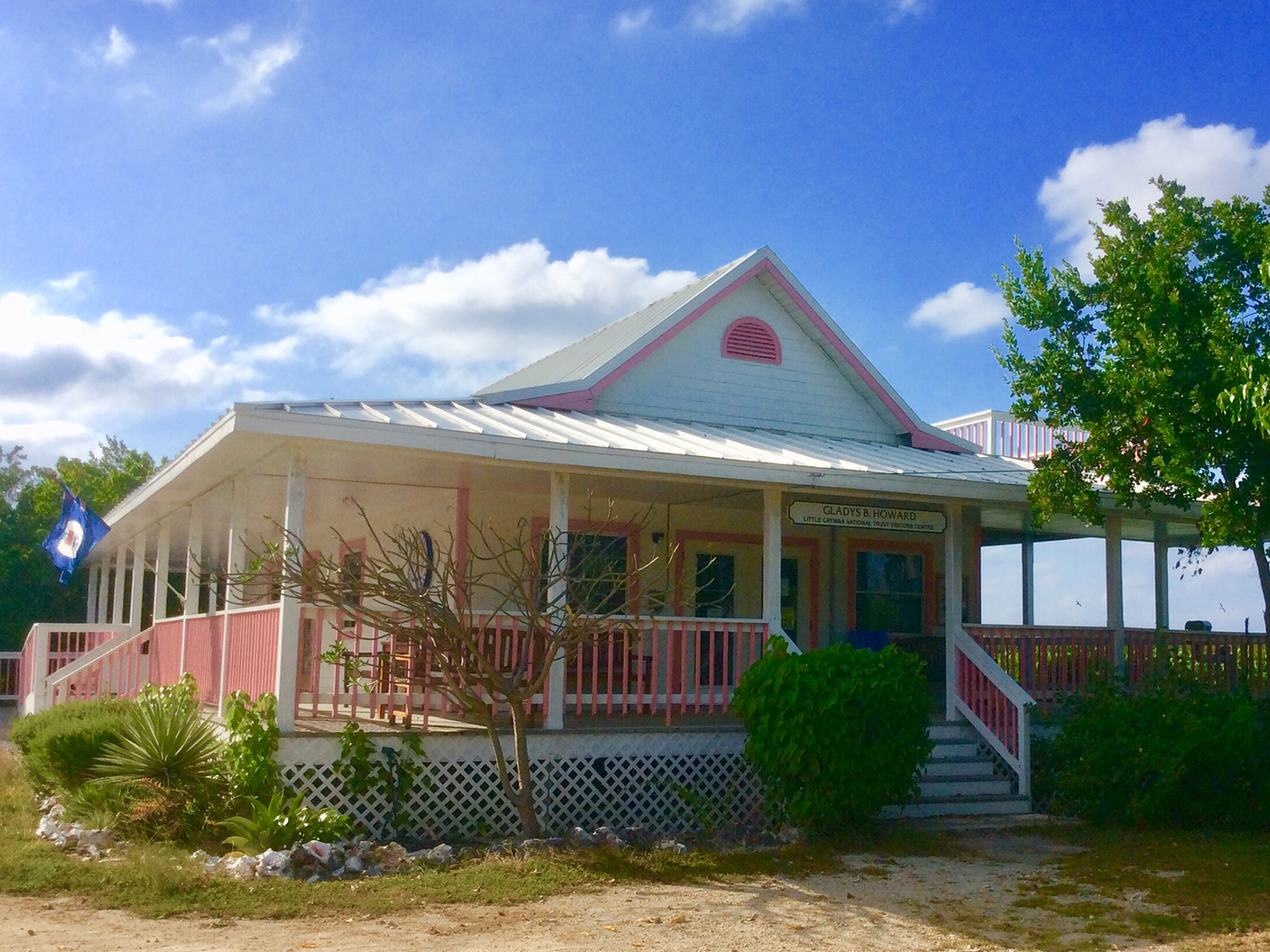
The Gladys B. Howard Visitors Centre and Gift Shop
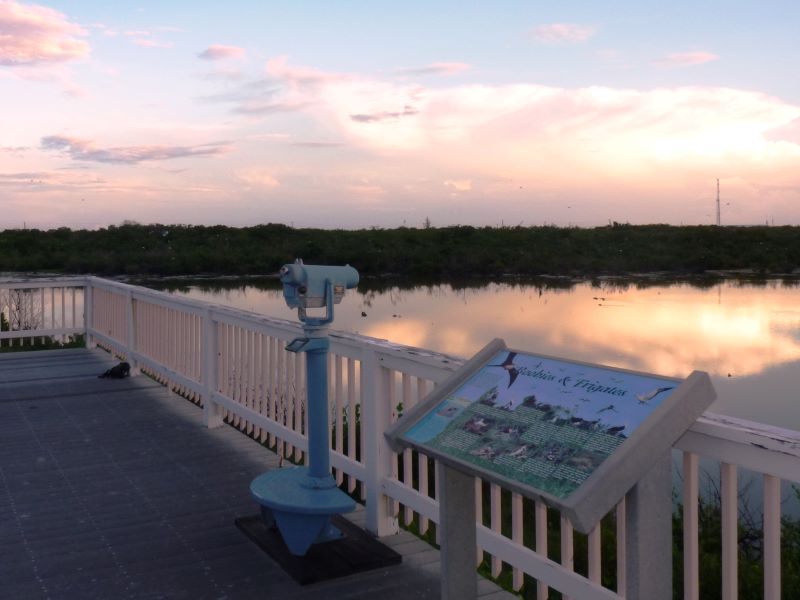
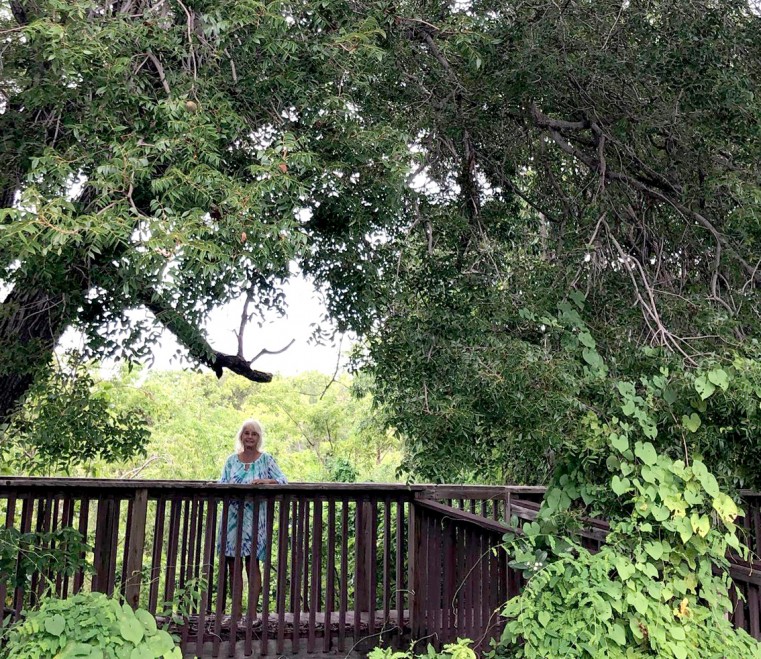
The Gladys B. Howard Visitors Centre and Gift Shop, established in 1992, is located on the edge of the 43 ha Booby Pond Nature Reserve, designated as a RAMSAR Convention wetland of international importance, where the interaction between Red-footed Booby birds and Magnificent Frigatebirds can be observed daily.
The Centre is open at varying hours during the week (depending on volunteer availability):
Exhibits and Posters on the natural history, flora and fauna of Little Cayman
A free library (take one, leave one)
Two observation decks with telescopes (available anytime)
Lectures are offered throughout the week around the island and at the Visitors Centre by request. The lectures are customized to school groups, researchers, and island guests and can encompass a wide range of topics. Visiting presenters can also request to utilise the Centre based on availability.
Sister Island Rock Iguana Preservation
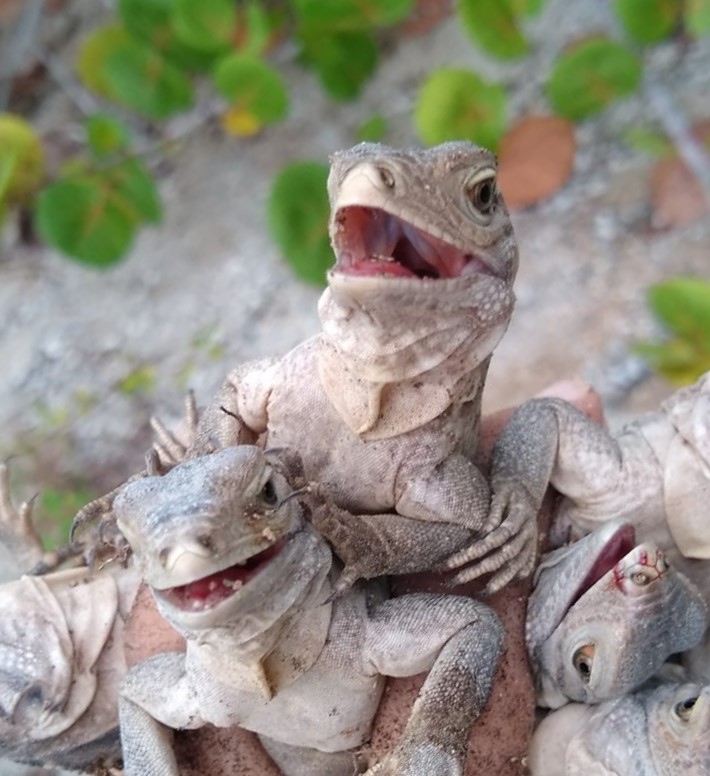
Protection of the habitat and nesting areas of our endemic and endangered Sister Islands Rock Iguana population is an important part of our mission. The National Trust holds one of the largest known communal nesting sites on the island at Preston Bay, located west of the airstrip.
With the support from the Little Cayman community, the population of SIRIs is on the rise! We recognize the impact that humans have on their survival. Through education and action, these iguanas can be cherished for generations to come.
Prevent Predation – keep your pets on a lead or indoors
Report Free-roaming Animals – SIRI has no natural predators
Limit interactions with them – take photos but remember they are wild!
Do not feed them – it changes their behaviour, and they can bite
Sister Islands Rock Iguanas are protected by Law and volunteers are trained under the supervision of the Department of the Environment (DoE). Volunteers work in concert with the DoE on ongoing research and data collection to ensure the survival of this unique, iconic animal of Little Cayman.
Fun Facts about our Sister Islands Rick Iguanas (SIRIs):
Endemic – found only in Cayman Brac & Little Cayman
Three Eyes –their parietal eye on the top of their head detects light & movement
Cold-blooded – they bask in the sun along roads to regulate their temperature
Sleep underground – they burrow underground for protection and regulation
Detachable tail – they can detach and regrow their tail
Each site plays a vital role in conserving native and endemic plants, birds, reptiles, and marine life. Preservation and protection of the natural environment for present and future generations is a mandate of the National Trust for the Cayman Islands.
Looking to explore these sites? Download the free National Trust for the Cayman Islands app on your iOS or Android device and unlock a window into the rich natural and cultural heritage of the Cayman Islands. The app provides helpful maps, engaging background stories, and up-to-date visitor tips – a perfect companion for locals and visitors alike who want to explore, learn, and connect with the Cayman Islands in a deeper and more meaningful way.
Full Moon Plastic Pickup
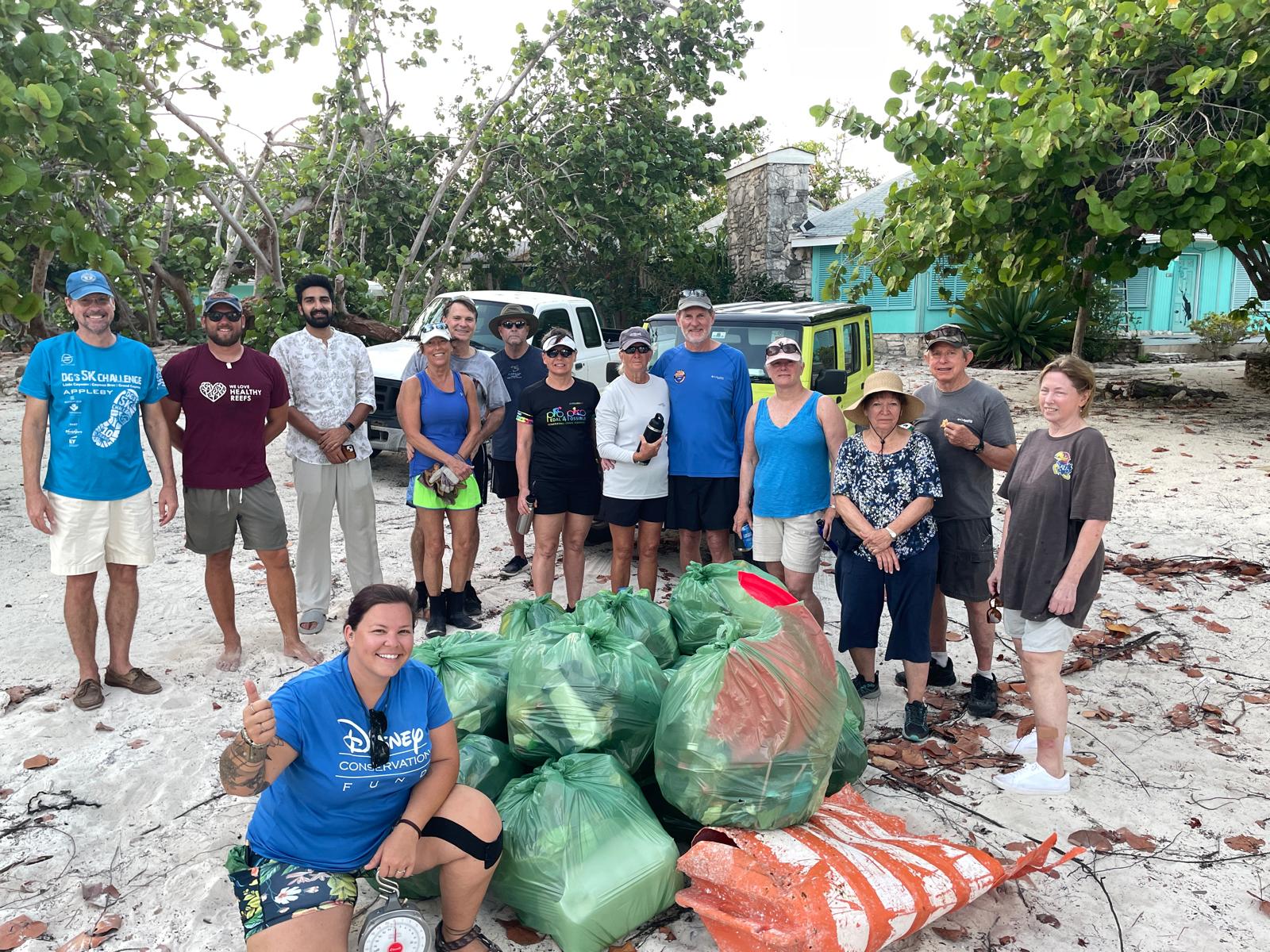
Our dedication to maintaining a clean, natural environment gave rise to this monthly ocean plastic and flotsam cleanup of our island’s beaches. The initiative expands to several beaches around Little Cayman, to include our most visited beaches – Jackson’s Beach, Preston Bay Beach, and Point of Sand as well as others (depending on prevailing wind and wave conditions) – Owen Island, South Hole Sound, the West End Lighthouse, etc.
Our local community members, resorts, and businesses sponsor the Full Moon Plastic Pickups, providing donations, supplies, food, and refreshments for volunteers that help keep our beaches pristine for all to enjoy. A huge thank you for their continued support!
From its inception in 2018, several tons of plastic and debris have been collected from the shores and interior of Little Cayman. Check out our Facebook pageto follow our yearly progress or join a cleanup!
Green Iguana B’Gonna
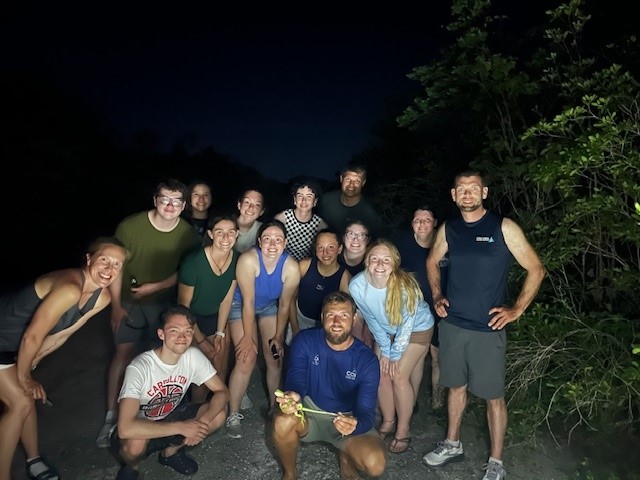
Originally founded by two dedicated individuals in 2007, Green Iguana B’ Gonna (GIB’G) was a movement to educate individuals about the invasive green iguana (Iguana iguana) and humanely remove them if found on Little Cayman. GIB’G is now incorporated as a Little Cayman District Committee initiative to expand its scope and facilitate needed funding for success – preventing the arrival of and controlling the invasive green iguanas. This initiative is necessary to limit the numbers before reaching crisis proportions and requiring millions of dollars to address.
To date over 200 green iguanas, including some pregnant females carrying dozens of eggs, have been removed from the fragile Little Cayman ecosystem. In 2017 hybrid green/rock iguana hatchlings were discovered and removed, proving green iguanas pose an existential threat to our unique species.
Monthly community searches are organised by the National Trust to humanely remove these invasive green iguanas and continue the effort towards a potential eradication. T-shirts are available to provide financial support for our efforts.
Wildlife Rescue, Care, and Rehabilitation
Volunteers working with the DoE provide medical treatment, care, and rehabilitation to rescued and injured wildlife, with the eventual reintroduction of animals into the wild.
With no permanent professional veterinary services available on Little Cayman, funds raised at the 2019 Easter Auction have been earmarked to provide veterinary first aid and medical treatment training for volunteers.
In addition, the Little Cayman District Committee has committed funds for off-island veterinary services for injured wildlife.
Meet Magpie
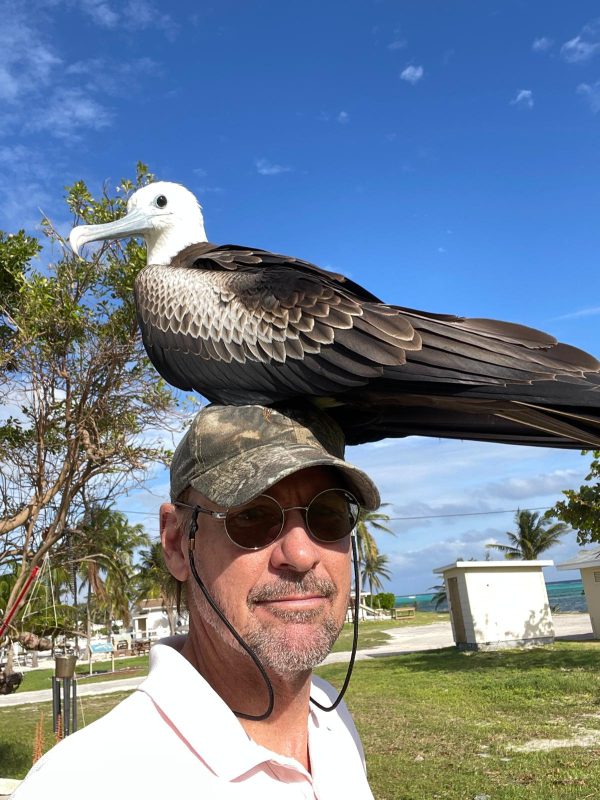
In March 2024, the Little Cayman District of the National Trust and DoE Officer Ronnie McDougall began the unexpected task of rehabilitating a Magnificent Frigatebird chick, locally called a Man-O-War.
She was named Magpie and stayed in Ronnie’s trust for just over a year, eating fish (provided by the National Trust and community members) and learning how to fly. After several months, Magpie started to interact with other frigatebirds and even found herself a male to court in early 2025. She would continue to see Ronnie for food if she hadn’t caught herself enough, but she became more independent each week. Her last meal with Ronnie was in early April – Magpie had fully integrated into the colony.
She was the first frigatebird to be rehabilitated and reintroduced back into the colony, but unlikely to be the last thanks to this invaluable initiative.