Colliers Wilderness Reserve: Biodiversity Beyond Cayman’s Beaches
Nestled away in the heart of East End, the Colliers Wilderness Reserve is a serene wild space. This protected area spans nearly 190 acres of xerophytic shrubland, dry forest patches and wetlands and is managed by the National Trust for the Cayman Islands. It is one of Grand Cayman’s most ecologically important protected areas, providing habitat for many of the island’s endemic and native species.
Both the Salina Reserve and the Colliers Wilderness Reserve serve as designated release sites for the iconic Blue Iguana (Cyclura lewisi). However, unlike the Salina, Colliers Wilderness Reserve also offers a public loop trail, making it one of the few places where visitors can experience this wilderness firsthand.
Where Adventure Meets Conservation
For those who journey to Grand Cayman’s eastern tip, Colliers Wilderness Reserve offers a scenic and calming walk through the reserve’s nature trail. The ~300-metre loop winds through the protected area allowing visitors a chance to spot native plants, birds, insects, lizards, and if lucky, even a free-roaming wild Blue Iguana.
The trail was developed with the support of a European Union grant in 2014 and is maintained by the National Trust with assistance from partners including our very own Cayman Island’s Regiment.
A Sanctuary That Lives
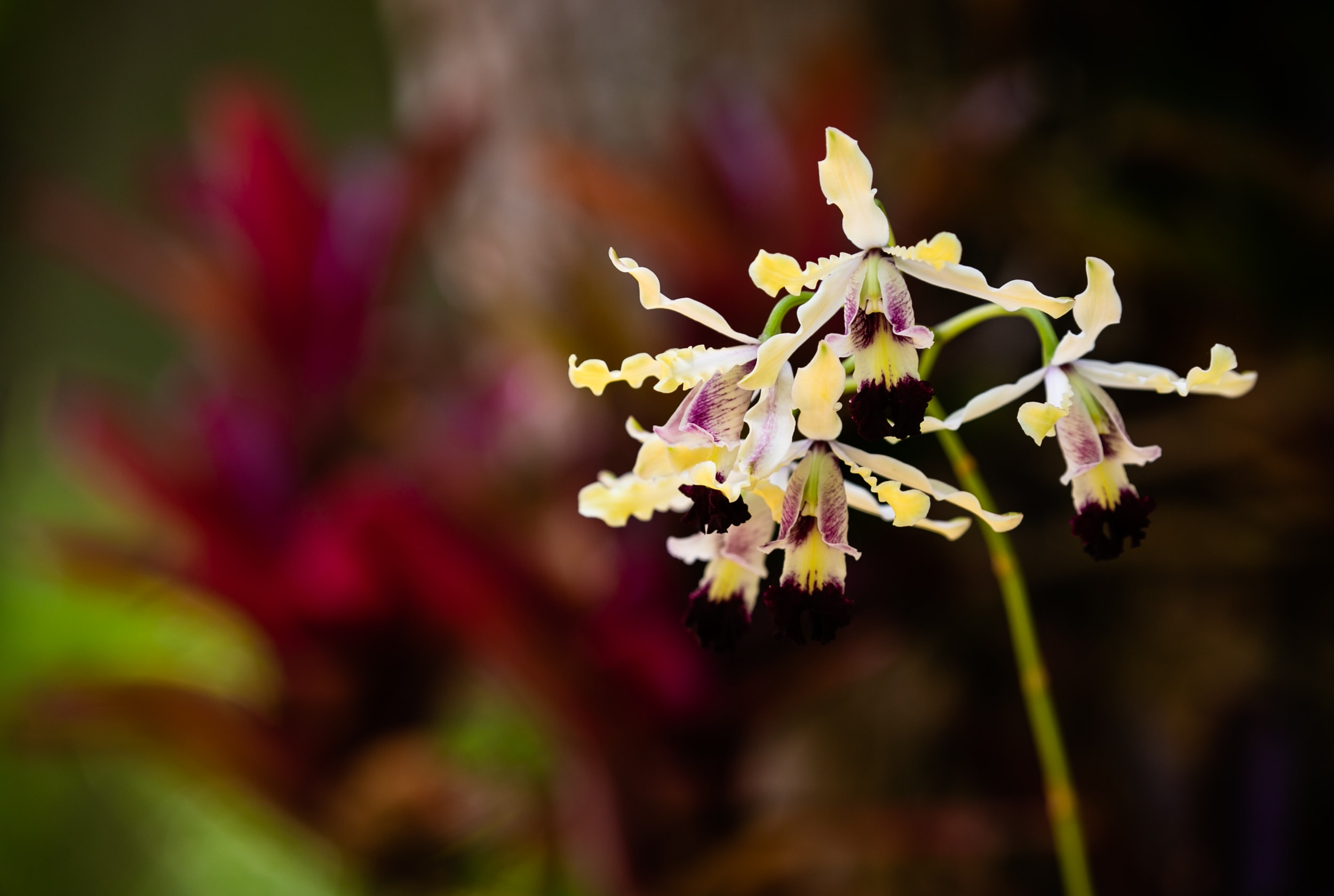
Accompanied by the endangered Grand Cayman Blue Iguana, the reserve is home to an extraordinary variety of life. Within its borders are remnants of Cayman’s old growth “ancient forests” – dry rocky woodland shaped by jagged limestone pinnacles called phytokarst. These habitats support a remarkable array of plants, including orchids, cacti, vines, mistletoes, and shrubs uniquely adapted to this harsh terrain.
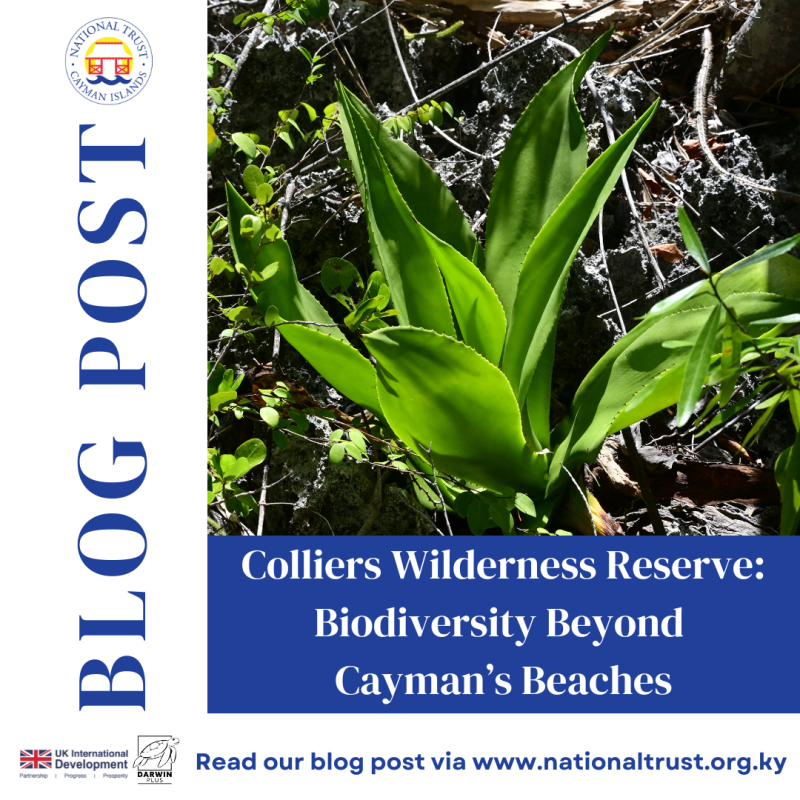
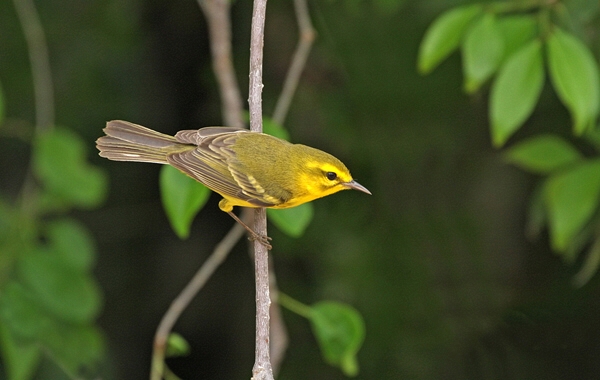
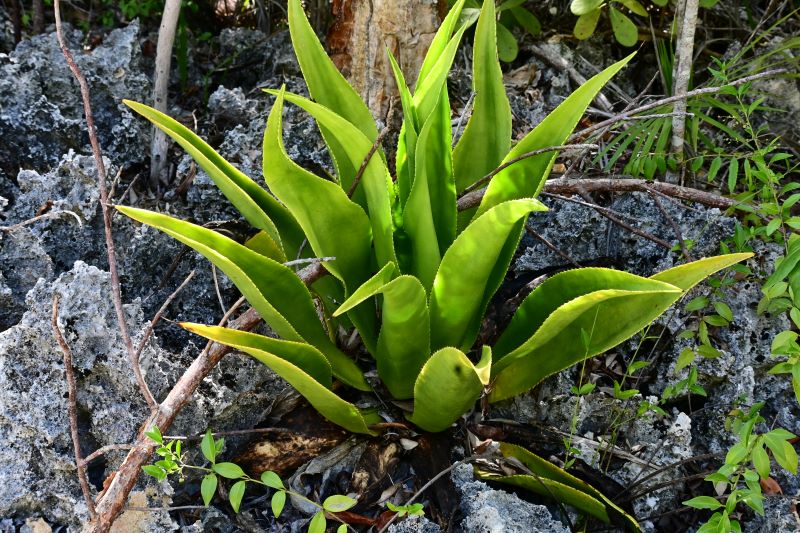
Among the most iconic is the endemic Cayman Agave (Agave caymanensis), a striking succulent with rosettes of fleshy leaves lined with sharp spines and crowned by a tall flowering stalk. Known locally as the “Century Plant,” it may take decades to bloom—flowering once before dying—and in doing so provides an essential food source for native bats. This resilience and ecological importance make the Cayman Agave both a symbol of survival and a keystone of the reserve’s fragile ecosystem. Avian treasures include the Cayman Parrot (Amazona leucocephala caymanensis), Vitelline Warbler (Setophaga vitellina), and the Bananaquit (Coereba flaveola). Butterflies flit through the forest, while reptiles like the endemic Grand Cayman Racer snake (Cubophis caymanus) thrive in the undergrowth. A rare rediscovery in 2024 of the Cayman Stick Insect (Haplopus woodruffi)—unseen for more than 40 years—underscores the importance of Colliers as a biodiversity refuge. The unique variety of species found in this protected area is a testament to the extraordinary biodiversity of the Cayman Islands, and a reminder that these treasures must be preserved for present and future generations.
Challenges on the Horizon
Like all of Cayman’s protected areas, Colliers faces growing pressures. Invasive species—particularly Green Iguanas, feral cats, and rats—threaten native wildlife by preying on iguana hatchlings, birds, and reptiles. Invasive plants and agricultural pests also pose risks, spreading quickly in disturbed areas.
Fire is another concern, as the shrubland ecosystem is highly vulnerable to burns that can devastate vegetation and soil. Development pressures around the East End, including agriculture, housing, and tourism expansion, increase the risks of habitat loss, land clearing, and encroachment.
Despite these challenges, ongoing management and monitoring by the National Trust, supported by local and international partners, aim to safeguard this wilderness for the long term.
Why it Matters
Colliers Wilderness Reserve is one of Grand Cayman’s most important wild places, protecting nearly 190 acres of rare shrubland, forest, and wetland while safeguarding the East End freshwater lens, a critical natural water source. It is a stronghold for the endangered Blue Iguana and many other endemic species, but what makes Colliers especially remarkable is that the public can experience this wilderness firsthand. Walking the loop trail offers a rare chance to step into a living landscape of global significance, where Cayman’s natural heritage is protected not only for wildlife, but for people today and generations to come.
Want to help protect this wilderness reserve?
– Visit Colliers Wilderness Reserve and walk the loop trail. – Donate to the Land Reserve Fund to support habitat protection. – Become a Member of the National Trust to ensure long-term conservation of national protected areas.
By supporting Colliers Wilderness Reserve, you are helping preserve one of Cayman’s last great wildernesses for generations to come.
BACK TO NEWS