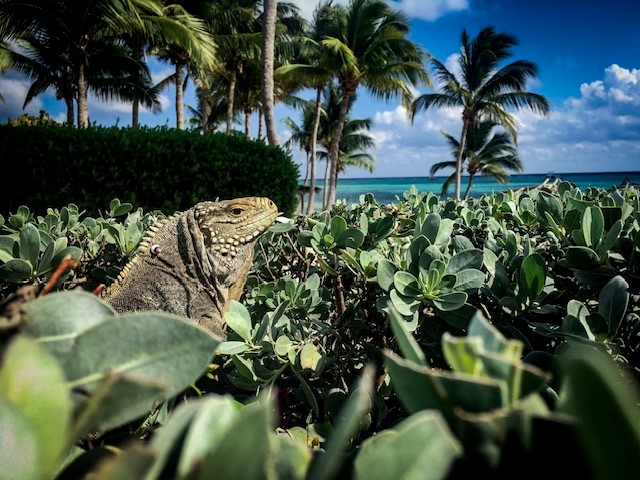
The Sister Islands Rock Iguana (Cyclura nubila caymanensis) is one of Cayman Islands’ endemic species (only found in Cayman Brac and Little Cayman) and is considered critically endangered. The appearance of the Sister Islands Rock Iguana can vary throughout their lifecycle. Adults are usually a greyish brown, with local highlights in orange, cream, and sometimes a little blue. They also don black gloves and have red (instead of white) around their iris. Hatchlings are 20cm (8in) with heads relative to their body size. They develop their adult characteristics starting at age 3.
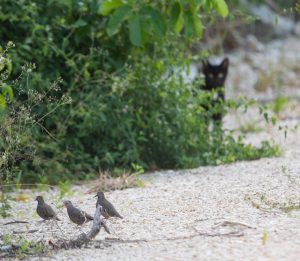
The Sister Islands Rock Iguana numbers are suffering extreme losses, primarily due to human activity and the introduction of non-native predators such as free-roaming dogs and feral cats. Recognizing the population declines, efforts have been made to understand the impacts of humans and predators and to utilize initiatives to reverse the trend before we lose them completely.
A project led by the Durrell Wildlife Conservation Trust from 2007 – 2011, in partnership with the Cayman Islands Department of Environment and Blue Iguana Conservation, has assessed the risks facing the Sister Islands Rock Iguana. The information gathered during the research project provided much-needed insight and confirmed the need for active preservation of the species in order to prevent a population crash and avoid the need for a major recovery effort. In 2011, we – along with the Cayman Islands Department of Environment, the International Reptile Conservation Foundation, Inc., and local stakeholders – launched a species management plan for the Sister Islands Rock Iguana which details the strategy necessary to increase the population, as well as the deadlines and parties responsible for various action items and gives voice to our Sister Islands Rock Iguanas.
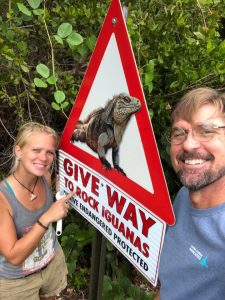
GIVE WAY TO ROCK IGUANAS
Sister Islands Rock Iguanas have the right of way in all encounters, and signs throughout the Cayman Brac and Little Cayman are installed to remind us. Unfortunately, they can move very quickly, in an unexpected direction so it is important to follow the speed limits to ensure their safety.
Sister Islands Rock Iguanas are cold-blooded and can be seen basking on the road. They often do not recognize vehicles as a potential danger until it is too late. It is our duty to ensure we are driving responsibly, especially during mating season (March – June) and hatching season (August – October) when they are more active along the roads.
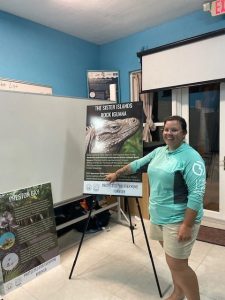
Conservation of any species is grounded in education as much as it is grounded in action. By attending presentations surrounding the safeguard of a native species, like the Sister Islands Rock Iguanas, you are indeed participating in conservation efforts. Through these presentations and lectures, you will discover the importance of biodiversity, how delicate island ecosystems are, and what it means to help sustain our ecological integrity for generations to come.
What can you do? By attending one of our weekly lectures, you will understand the importance of limiting our interactions with the Sister Islands Rock Iguanas, leaving them to remain wild and independent of humans. Do NOT feed the iguanas – feeding by humans draws them out of the wilderness and into the highest threat areas and changes their behaviour and natural instincts.
PET CARE CAMPAIGNS & INVASIVE SPECIES MANAGEMENT
Reducing the numbers of invasive species that threaten our Sister Islands Rock Iguanas starts with proper Pet Care. Many of the predators that are currently threatening the survival of the native and endemic wildlife do not naturally occur here. If they are left to their instincts, we risk losing the very biodiversity that make our islands special. Cats are a common threat, hunting and eating the young Sister Islands Rock Iguanas before they mature; domestic dogs are also being allowed to run free, which threatens the breeding adults. By controlling the movements of our pets, we can ensure the safety of both our companions as well as the native wildlife.
The Cayman Islands Government has implemented initiatives over the years to try to reduce the impacts of invasive species on the Sister Islands Rock Iguanas, including invasive species culling programs and a headstart program for the hatchling Sister Island Rock Iguanas. Through these efforts, we have seen a positive trend in population numbers of our Sister Islands Rock Iguanas. From the lowest estimated population in 2022 to the current numbers (2025), the Sister Islands Rock Iguana population has tripled from nearly 1000 individuals to an estimated 3500 individuals, with the majority of those Sister Islands Rock Iguanas living in Little Cayman.
What can you do?
Spay/Neuter your pet
Microchip & Collar your pet
Keep your pet Indoors/ Control their Movements
Take your pet for Regular Vet Visits for vaccinations and medications
Register your pet with the Cayman Islands Government