Darwin Plus 207 Grant – Empowering and preparing Cayman’s Sister Islands to tackle invasive mammals
Mission Accepted
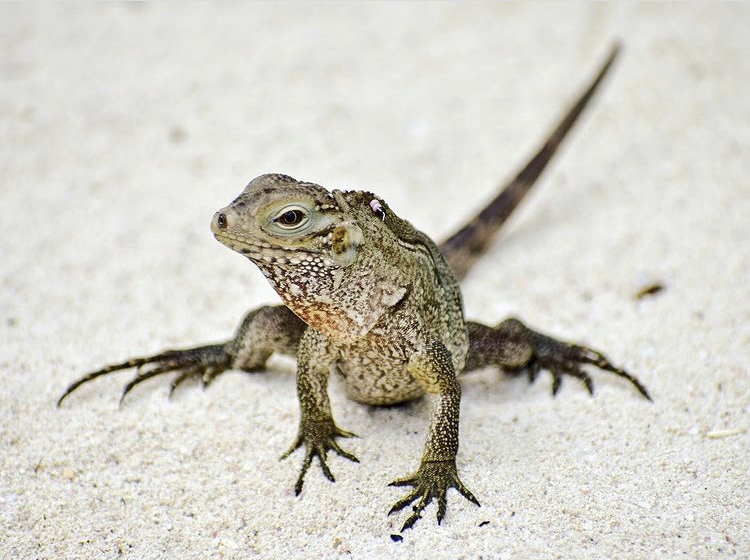
The future of the unique native biodiversity of Cayman’s Sister Islands, including the Critically Endangered Sister Islands Rock Iguana (SIRI), is seriously threatened by invasive non-native mammals, especially feral and domestic cats. This project will ensure that local agencies and the Sister Islands’ communities are prepared to collaboratively deliver long-term strategies to sustainably protect native biodiversity by enhancing responsible pet management, developing a humane feral cat eradication plan, and increasing on-island capacity to implement enhanced biosecurity and invasive mammal suppression long-term.
To learn more about the Darwin Plus project, check out our FAQ document surrounding the feral cats and work being done in the sister islands.
Adverse Neighbours- Introduced species harm local biodiversity
 Feral cats are members of the domestic cat species (Felis catus) that do not have a person responsible for their care and exists with little to no dependency on humans. They prey upon native species, in particular juvenile/hatchling SIRI, other reptiles and seabird chicks. SIRIs were the largest land animal before humans arrived. They evolved without any predator pressure. Juveniles/hatchling SIRIs are left vulnerable to predation as they do not have natural self-preservation instincts or defences against cats.
The Cayman Islands’ resident colonies of breeding seabirds are also at risk. Seabirds are in decline globally, in part, due to invasive mammal predation at nesting sites when the birds are particularly vulnerable. In Cayman Brac, the Brown Boobies (Sula leucogaster) are ground nesters, and in Little Cayman, the Magnificent Frigatebirds (Fregata magnificens) and Red-footed Boobies (Sula sula) nest in low-lying mangroves, leaving them completely exposed.
Feral cats also predate other wildlife in Cayman, including snakes, anoles, Curly-tailed Lizards (Leiocephalus carinatus granti), bats, and small birds. Local studies show that the health status of feral cats is very poor. They suffer from constant parasites, signs of disease and poor body condition. Simply releasing cats after the trap-neuter-release programme does not provide the cat with a healthy quality of life.
More information on feral cats can be found in the DoE Feral Cat FAQ and Wildlife Impacts and Health of Cats in the Cayman Islands report.
Feral cats also predate other wildlife in Cayman, including snakes, anoles, Curly-tailed Lizards (Leiocephalus carinatus granti), bats, and small birds. Local studies show that the health status of feral cats is very poor. They suffer from constant parasites, signs of disease and poor body condition. Simply releasing cats after the trap-neuter-release programme does not provide the cat with a healthy quality of life.
Pet Cat Care
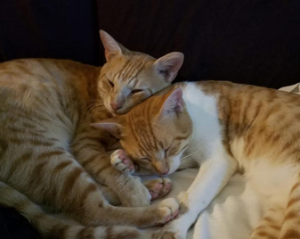
Domestic pets can still contribute to native species’ decline if not cared for responsibly and allowed to roam free outdoors. They can also breed with feral populations and produce unwanted kittens/puppies that increase the populations of feral cats/dogs that attack and kill native species or unfortunately become roadkill.
Restricting the uninhibited movement of pets is important, too. Ensure your pets remain within your property or, when you are out and about (e.g. on a walk), your pets remain on a lead and under control. Please stick to designated trails to avoid disturbing native wildlife. These measures work to reduce the risk of increasing the feral populations but also protect the health and safety of our own pets.
Responsible pet ownership is at the heart of this issue and the key to resolving the problem:
- Spay/Neuter – This reduces the pet overpopulation crisis, and in turn, the feral cat population. Any veterinary clinic on Grand Cayman can offer this service, as well as the Department of Agriculture (DoA). On the Sister Islands, spay/neuter services are often facilitated through collaborations between the Cayman Islands Humane Society, the DoA, veterinary teams, and the National Trust for the Cayman Islands.
- Microchipping & giving your pet a Collar ensures clear identification for your pet in the event of escape. But remember, you must register your pet’s microchip in the database to link them with you! Best registration practices are with the manufacture database, as well as with the Cayman Islands Government where possible.
- Keep your pet Indoors/ Control their Movements to keep them safe. If your pet needs outside time, consider building a “catio” or go for a walk on a leash. This is the best way to give them enrichment and prevent predation of vulnerable wildlife.
- Take your pet for Regular Vet Visits for vaccinations and medications- Did you know that diseases can spread between cats, wildlife, and occasionally humans? By ensuring your pet is healthy and immunised, you are improving the welfare of your pet and preventing any unwanted diseases. On the Sister Islands, the National Trust for the Cayman Islands, veterinary teams, and pet owners in the community organise care as needed.
Catios
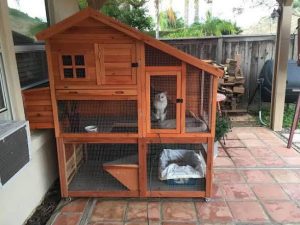
Help! My cat wants to go outside, but I don’t want it to hunt native wildlife!
If your cat is still asking to go outside, you can still provide the outdoor experience through enclosures that keep them safe and the wildlife, too. Catios are a great consideration to offer them the outside time they may want without fear of their being lost, hunting native wildlife, or exposure to traffic accidents. Catios for cats, also known as “cat patios,” have gained popularity as a wonderful addition to any home and can be constructed to accommodate any home.
- Why Should I get a Catio? It provides safety, enrichment, and wildlife protection while reducing cat-related dangers.
- Are catios expensive? Costs range from a $100 DIY widow box to $10,000+ luxury custom builds
- What’s the best catio for an apartment? Window-box catios or small balcony enclosures
- Where can I buy a pre-made catio? Several online retailers offer kits
- Can I build a catio myself? Yes! Plans are also available through several online retailers
Please watch this space for upcoming testimonials from participants in catio trials and schematics that might be suitable for your home.